
Home › Hard Drive Data Recovery
Hard Drive
Data Recovery
The picture on the right is of a modern mechanical hard drive consisting of 3 platters and 6 read/write heads. ie one read/write head per surface.
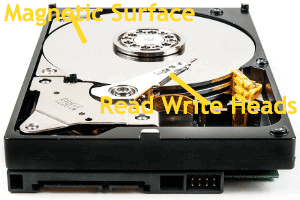
When we refer to the process as Data Recovery, it actually involves repairing the hard drive to a degree that allows for the retrieval of important files.
Clients often express a sentiment of prioritizing data retrieval over the condition of the drive itself, but it’s important to note that there isn’t a magical machine capable of instantly accomplishing this. The process of data recovery entails a meticulous diagnosis of the drive to determine the necessary repairs.
It’s crucial to be cautious of any claims of being able to perform data recovery at a fixed price within a short timeframe, as such assertions often indicate a lack of understanding of the data recovery process.
The following sections outline common failures of hard drives
Failed Electronics
Repair usually involves just replacing the drive’s electronics, click the link below for a more detailed discussion. However should the electronics fail while the device is in use further data recovery steps may be required.
Read More →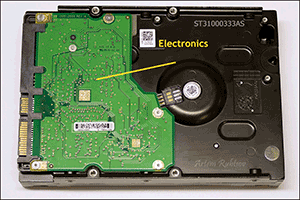
Bad Sectors
Bad sectors are a common cause of data loss and pose a significant challenge in data recovery due to their impact on storage devices. They occur when parts of a storage device can no longer reliably read data, often due to deterioration of the magnetic media or flash memory, as well as hardware or firmware issues.
There are two main categories of bad sectors: physical and logical. Physical bad sectors are attributed to permanent damage to the storage media — wear and tear, head crashes, surface scratches, manufacturing defects, contamination, heat damage, power failures during writes, and NAND flash wear in SSDs. These physical bad sectors cannot be repaired.
Logical bad sectors occur when the sector itself is physically healthy, but the stored data or error-correcting information has become corrupted. This can result from unexpected power loss, software crashes, file system corruption, firmware bugs, and incomplete writes.
Read More →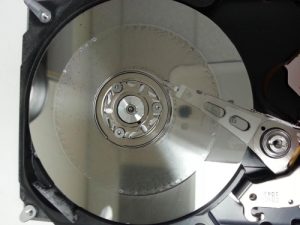
Raw Data Recovery
Raw recovery, also known as file carving or signature-based recovery, is a data recovery technique that reconstructs files directly from the raw contents of a storage device, without relying on the file system metadata. This technique is typically utilized as a last resort when the file system is severely damaged or unavailable.
When employing raw recovery, a recovery program does not rely on file system structures like NTFS Master File Table (MFT), FAT directory entries, exFAT directory structures, APFS metadata, or EXT inode tables. Instead, the program scans every sector of the drive in search of known file signatures, as the usual structures providing file location, timestamps, and permissions may be missing or corrupted.
Firmware Corruption
This is where the drives system information which is stored on a special area of the drive has become corrupt, is malfunctioning or unreadable. Click the link below for a more in depth discussion.
Read More →Read/Write Head Failure
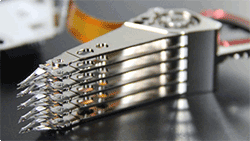
Lastly the drive’s read write heads may fail either from physical damage or failure of electronic components in the head assembly.
Not sure which failure you have?
We do not charge for the diagnosis of your hard drive and our quotation comes with no obligation to proceed.